Showing posts with label Game Design. Show all posts

Sunday, 18 June 2017

I've been busy...

As it's been quite some time since I've posted anything, here's is an update of the pile of things I've been up to since... October?  last year?  Yeah, I need to post more often...

Novel Writing

Everything looks easy from the outside
I started a novel.  Yep, I'm checking off an item from my bucket list.  I'm writing a science fiction novel and will self-publish it on Amazon and other places online.  I won't subject you to a litany of what my novel is about, but I may devote a future post to talking about this project, as there is some cool (to me at least) setting development I've done which leaves room for additional stories in the future about these and other characters, and some people may find my methods interesting and or useful.

I've always wanted to do this and like a lot of aspiring authors I've had my share of dreams of writing many novels, making mountains of money, and having scores of fans.  Right now, I just want to finish this novel.  I have too many started novels, and no completed ones.   This one is different though, I swear! :-)  I'm further along than any previous novel attempt, I know 90% of the plot, including the ending!  I have almost half of it written.  It's a slow process, far slower than it needs to be, but we Humans do tend to throw obstacles into our own paths.

Board Game Design

prototype board w/ no graphics
I designed and prototyped a board game.  The original concept was created by my 5 year old son.  The basic gist is each player is a Potion Maker, searching the land for ingredients with which to produce various potions.  At the end of the game, the player with the most valuable potions produced wins.  There's a lot more to it with exploration, monsters, equipment, special locations to visit, set collecting, unique player abilities, and so on, but it's a workable one sentence description.

I've played it with my son and with a couple of adults and they all enjoyed it.  There are two levels of play, making it playable in either "kid" or "adult" settings.  I made cards using the free NanDeck software (a powerful program, but the learning curve is somewhat steep).  I'm not sure if I want to publish it though.  It's a fun game, but I'm concerned about spreading myself too thin.  I have an account at The Game Crafter, so I could make it available, but I'm also busy with other projects right now so who knows...

Hero Kids Products

I do intend to produce more Hero Kids material, however... my external HD died recently, taking with it all my working files for everything I was working on last year for Hero Kids.  Yes, you may freely deride me for my lack of data protection.  I was dumb and I can own up to that.  Next time will be different though, I swear! :-)

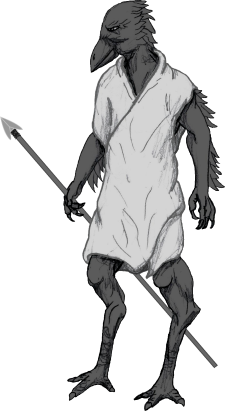
Anyway, I do have some ideas of what to make next.  For example, I want to produce some adventures to go with Corvids: A Racial Supplement, which has been selling rather well (thank you!) considering it has no supporting adventures and I haven't promoted like I should.  I have other ideas too, but any Hero Kids product has to stand in line for a little while longer until I finish some OTHER other projects...

Customisable and/or Expandable Card Game

Not exactly visually exciting yet...
I'm making a card game with a friend.  It has deck building, CCG like elements, and a handful of design choices we've not seen done in any other game to date.  Hopefully people will like it.  We are planning on professionally publishing it  - probably with a Kickstarter and all the bells and whistles.  We're still at the designing stage though, so it'll be at least a few months before version one is ready for internal play testing and then we're allowing 1-2 years of external, blind play testing with play groups and the further re-designing before we'll even consider publication.  We want this to be a polished and fun game, so we're putting the time in to do it right instead of rushing a half-baked idea to market.  I've designed about 20 or more board and card games over the past 20 years, I even self-published about a dozen of them around 1998-2001, so I'm comfortable in completing this project.  It's my friend's first game though, so he's pretty excited about it all.

Contract Graphic Design

Definitely NOT a staged screenshot... ;-)
Most of my readers won't know this already, but during the tail end of the 1990's I was a graphic design professional, doing all sorts of work for small to medium sized clients - everything from business cards, to brochures, catalogues, books, magazines, comic books, and web sites, I even did corporate branding for a few clients.  Then the "Dot Com Bomb" struck, the small design house I worked at shut down, and I refocused, heading in a different direction for over a decade (ironically enough, co-founding a successful online custom clothing business, but that's a story for another camp fire).

The upshot of this preamble is I have "mad skilz yo" with layout - I am the shizz nizzle and various other silly, self-aggrandising statements.  So, when my good friend and owner of The Stuffer Shack, Chris Stevens asked if I would do graphic design and layout for his new publishing imprint Stuffer Shack Press, I was happy to oblige.  That was about a month ago and now he's willing to talk about it(check it out, he's offering cash prizes!), so I'm able to show you a little as well.  I'll be talking about this project again, so stay tuned.

They totally should compete, they'd rule!
It's been a really fun project for me as he bravely gave me pretty much free reign to design and reorganise his work, allowing me to bring my creativity to the table.  Obviously, anything I did had to be approved by Chris, but overall I was free to come up with whatever I felt would work best.  It's given me a welcome opportunity to further develop my software skills with Inkscape and Scribus.  I was already pretty good with Inkscape, but in truth only a novice with Scribus.  Luckily DTP skills, even old ones, are very transferable though, and I've been scaling the Scribus learning curve like an Olympic quality mountain goat - er, if mountain goats were competitive climbers in the Olympics that is... You know what I mean!  Of course, I have tonnes of things still to learn, but I'm quite pleased with being able to take my ideas and realise them on the page.

Will Graphic Design for Food?

I can make stuff look great.
This project reminded me I REALLY enjoy working on graphic design.  It's creative, puzzling, and has a zen mantra like aspect to it - basically, it feels like combining artistic painting, Sudoku, detective work, and meditation into a single activity.  Hey, that's what it feels like to ME, okay?  Back off and get your own sammich! :-)  My point is, I like doing it, and without being boastful I think I'm pretty good at it.  So, if anyone out there in internet-land is looking to take their Word docs, napkin scribbles, or whatever and turn them into something professionally publishable, hit me up and we can talk turkey, or some other meat if turkey's not your thing.  I can produce in multiple styles, and I have at least one very recent reference for RPG graphic design I've done for someone other than myself.


Friday, 15 July 2016

Naked Hero Kids

No weapons, no armor, no training, no dice!
Okay, so not actually PLAYING naked, but what are the stats of a completely unequipped and untrained Hero?  I spent some time comparing various Heroes and it appears they would be zero dice in their Melee, Ranged, and Magic Dice Pools, one die in the Armor Dice Pool, and three Health Boxes.  The Melee/Ranged/Magic Attack, Special Action, and the Inventory and Items sections would be empty, and the Bonus Abilities section would almost always be empty. (There are a few abilities representing inherent abilities that would stay, but most are part of their hero type.)

Now, no one would want to play this Hero, he's basically a blank slate, but by stripping away the weapons, armor, and training of a Hero, we can see some interesting "under the hood" workings of the Hero Kids system. One such discovery was a loose set of preassigned or default unnamed weapon and armor types as well:
  • Simple Weapon: Single handed weapons or spells which are the source of the Hero’s basic attack. These grant two die to the appropriate Die Pool (Melee, Ranged, or Magic), permit a basic attack dealing one damage, and are the prerequisite for the Special Action.  Example: The short sword used by the male Warrior.
  • Simple Advanced Weapon: Large two handed weapon employed by Brutes (or equivalents) which are the source of the Hero’s basic attack. These grant three dice to the appropriate Die Pool and permit a basic attack dealing one damage, and are the prerequisite for the Special Action.  Example: The two handed maul used by the male Brute.  As depicted, the female Warrior’s two handed, double-headed axe should grant three dice instead of two, or give her a one handed axe - Maybe her clothing is simple advanced armor?
  • Simple Armor: Partial armor or shield worn by a Hero. They grant one additional die to the Armor Dice Pool, and can act an alternate prerequisite for the Special Action.  Example: The medium wooden shield used by the male Warrior.
  • Simple Advanced Armor: Full armor or large shield worn by a Hero. They grant two additional die to the Armor Dice Pool, but reduce the Melee, Ranged, and Magic die pools by one die, and can act an alternate prerequisite for the Special Action.  Example: The “pots and pans” piecemeal armor worn by the male Knight.

Incorporating this method with the standard Hero creation guidelines can suggest ideas for new Heroes.  There is an opportunity for an Archer who uses a longbow of the simple advanced weapon type, conferring three Ranged dice.  Or an armored bowman with one ranged die and three armor dice. Alternately, if you have an idea for a Hero, you're unsure of how to allocate the dice, but you do know what kinds of weapons and armor they have, then this system can guide you.

Again, as I have said previously regarding other systems I’ve introduced for Hero Kids™, this one isn’t perfect.  No reverse-engineered, post-production, bolt-on system will 100% fit the pre-existing rules.  As noted above, the female Warrior and her two handed axe are short one melee die, similarly the female Healer has a large staff and she has no melee die. (Although in this case you could easily assume a Healer has no weapons training.)  Lastly, this system doesn’t make any allowances for wielding two weapons or weaponless attacks, however neither does the core rules, (see the male Rogue with two daggers), so I’m not going to bother addressing it.

Tuesday, 12 July 2016

Have We Been Looking at Hero Kids Dice Pools All Wrong?


Are Dice Pools equivalent to Attributes or are they more akin to Skill bonuses?  Is a Warrior with a Melee Die Pool of 3 dice stronger than one with 2 dice, or are they more accurate?  Their attacks both deal only one point of damage, yet the Warrior with 3 Melee dice will have more successful attacks than the other Warrior over time.  If so, then how can we more accurately portray a physically stronger character?

Having 3 Ranged dice makes you hit more often, not harder.
Simply making their attacks deal two damage each would be an obvious and simplistic method, but it isn’t ideal.  The damage/health granularity in Hero Kids™  is rather coarse, thus each damage point meted out or received is a large amount.  If we measure strength by how much damage one can effect, then the Hero who always does 2 damage with each strike due to their strength alone isn’t just a bit stronger than average, they are twice as strong.  This is the difference between being able to lift a person and being able to lift a refrigerator!  Such an approach doesn’t address any other aspect of being stronger than how much damage you do with your specific weapon.  Thus, the “strong” Hero who always deals 2 damage would NOT be able to lift any more than the “weaker” Hero as Skills reference the Heroes die pools.

We need to give stronger Heroes a bonus which mimics (even approximately) the effects of being stronger in the real world, without granting a bonus which is too large or too specific.  One could give stronger Heroes a ”Strong” Ability granting a bonus die for any strength related skill test.  This addresses the issue of stronger Heroes being able to lift heavier things, but still leaves attack unaddressed.

The only complete method of addressing a stronger Hero dealing more damage would be to increase the damage/health granularity. If we adopt a finer granularity, say double for the purpose of discussing this, then your average Hero has six health boxes, a normal Attack does two damage, and pre-existing Abilities or Items/Equipment which previously granted a +1 damage will now grant a +2. Die Pool modifiers remain unchanged as we aren’t altering that.  Technically this would work, allowing a Hero with the “Strong” Ability to also gain a +1 damage to their Melee Attacks without it being an overwhelming bonus.  However, the amount of effort to update all your game material could be daunting…

Here is the Brute Hero from the core rules, shown in its original and revised forms.  Adding the extra Health boxes, the Strong Bonus Ability, and modifying the damage amounts in the Hammer Smash Melee Attack and the Retaliation Bonus Ability isn’t a massive change.  Even if you’re not skilled with graphic design, a sticker over the appropriate spots could get the job done.  Still, this degree of change would need to be effected to every Hero, every Monster, every Item, and every Equipment.

Not all changes would be mathematically uniform either.  In some cases, to better serve the intent of the original ability, a different phrasing or an adjusted numerical change would serve better.

Plus, as the Brute example shows, one could make a case for altering other details to better serve the original intent, as I did when reducing the accuracy of the Brute’s Melee attack via a smaller Melee Die Pool when I increased the damage.

Given the total amount of change this solution requires, it is more accurate to call this Hero Kids 2nd Edition or some such thing.  While an interesting mental exercise in game design, unless it were combined with other desired system changes, creating a 2nd edition of this game may not be needed.  Hero Kids™ already passes the primary test for any game - children enjoy playing it in its current form.  Still, such things are fun to consider.

Thursday, 30 June 2016

Inventory - The Junk Drawer of Hero Kids

At first glance, the Inventory and Skills section of a Hero Kids™ Hero Card contains only Items and Skills. However, there are actually four categories of “things” in the Inventory and Skills section - Items and Equipment, and Skills and Abilities. Further confusing this is when the rules refer to Skill use as an Ability Test. Despite the fluidity of system terminology though, there are very real differences between Items and Equipment, and between Skills and Abilities.

  • Items: Objects which are expended once used (food, gold, bomb, a healing potion).
  • Equipment: Objects which remain for multiple uses (Rope, Staff, Raider’s Axe).
  • Skills: Character specific and conceptually thematic activities one learns to perform (Talking, Knowledge, Herbalism, etc.).
  • Abilities: Inborn or inherent traits usually assigned to all creatures of that type, although they can be possessed by an individual alone (Such as Dwarves with Dark Vision allowing them to see in darkness or a bird with Wings granting flight).

Inventory Abilities are not to be confused with the “Bonus Ability” listed elsewhere on the Hero Card, which is usually more of a thematically specialised Skill (Such as the Knight having the Bonus Ability “Defender”).
Inventory Abilities
One opportunity presented by recognising just how the Inventory Abilities differ from Skills or other Hero-specific Abilities (The Melee/Ranged/Magic Attack, Special Action, and Bonus Abilities) is that it provides a ready made location for us to intentionally place unique abilities which aren’t associated with the primary theme of the Hero, thereby creating a secondary theme which can become an alternate grouping for these Heroes (or Monsters, for that matter).


In the Hero Cards III expansion for Hero Kids™, there are non-humans such as Dwarves, Halflings, Elves, etc. They aren’t labelled as such, but their provenance is obvious. The Knight and the Stonemaster appear to be Dwarves and they both have the Dark Vision ability. One could also envision a group of cultists to some dark god of the ocean, and regardless of the role each member has (Fighter, Cleric, Baker, Candlestick Maker, etc.) you could give them all a “Breathe Underwater” ability.


Here are some ideas for Abilities for Monsters or Heroes: Breathe Underwater, Mind Reader, Shape Changer (specify form, such as”Shape Changer: Wolf”), Venomous, and Climber. Each of these would need to be fairly simple. Climber for instance could grant the ability to move up or down vertical surfaces like trees, cliffs, or walls as easily as walking on the ground. Venomous could deal repeating damage, paralyzation, or some such effect with a bite or sting.

If we to want to give Heroes or groups of Heroes Abilities more complex than a single static competency, the Inventory Abilities section isn’t really the best spot for it as it uses a symbol to denote the Ability with no room for text. I would advocate removing the iconized Abilities from the Inventory completely and moving them to the Bonus Abilities section, but that’s just my personal opinion. Adding such things as granting all Elves an Ability like Woodland Walk (Plus one movement and no terrain penalties within forested environments only.) would be better suited to the Bonus Abilities section of a Hero Card. Racial templates for Hero Kids™ has occurred to me previously and I do have some thoughts on how I’d implement it, but I’ll leave that for a possible future post.

Monday, 4 April 2016

How I Make Monsters For Hero Kids

If you want to make your own Monsters for Hero Kids, there isn't much in the rule book to guide you.  Not that there is any obligation for such guidelines to exist, but all the same, they aren't there.  The closest you'll get is the Creating Heroes section on page 19 for things like the difference between Normal Attacks, Special Actions, and Bonus Abilities, and the Health and Damage section on page 11.

The Health and Damage section mostly details how a Hero records their Health, takes damage, the Knocked Out condition, and methods of Healing.  Buried within though is also a simple ranking system for categorizing Monsters.

Basically, all Monsters fall into one of four power levels:
  • Weak: "One Hit Wonders". This Monster has only a KO Health box.
  • Normal: "One-Two Punch". This Monster has a KO and a Hurt box.
  • Tough: "Three Times You're Out". This Monster is equal to the standard Hero with three Health boxes - KO, Hurt, and Bruised.
  • Boss: "The Springsteen". These Monsters have four Health boxes, KO, Hurt, Bruised, and Grazed.

Theoretically, one could extend this to five or more Health boxes and have even more powerful Monsters, but I feel this would harm the playability of the game by placing an undue emphasis on a stats-oriented arms race.  D&D style RPGs already fill that niche, so there's no need to add such a focus to Hero Kids.

In studying different Monsters from many official Hero Kids Adventures, I noticed a trend towards corresponding numbers of Attribute Dice per power level as well.
  • Weak: Most Weak Monsters have two Attribute Dice with an average of 2.2 dice.
  • Normal: Most Normal Monsters have four Attribute Dice, although the average is 3.47 dice.
  • Tough: Almost every Tough Monster has four Attribute Dice. (average 4.16 dice)
  • Boss: Boss Monsters are highly variable in their Attribute Dice, yet the average works out to 5.5 dice.

I've taken these two correlations and worked them into an expanded system I use to create my own Monsters.  I hope you'll find it helpful too.

Points System for Hero Kids™ RPG Monster Creation


I’ve assigned each power level of Monster a number of points, which are distributed among four areas, with a limited number of starting slots for each area.  Once the “base form” is created, one can customize the Monster further to suit their needs.  The point distributions are:

Power Level
Attribute Dice Slots
Health Box Slots
Inventory Slots
Total Points
Weak
2
1
1
4
Normal
3
2
2
7
Tough
4
3
3
10
Boss
5
4
4
13

It should be noted that these points are not applied towards the normal compliment of Melee, Special, and Extra Actions and Abilities which all Monsters and Heroes receive.  They are so standardized in occurrence, yet so highly variable in composition that I didn’t feel they would benefit from being incorporated into this system.

The starting slots for Attribute Dice do not 100% match pre-existing Monsters, especially in the Normal power level, but I'll address that in a moment.  Health Box slots remain unchanged from the core rules.  Inventory slots are for those iconized things like Skills (ex: stealth), Abilities (ex: see in dark), and actual Inventory (Items and Equipment).

Now this system isn't intended to be a rigid set of laws one MUST follow, but a means of guiding the design process.  Once one has applied all of the the above, don't hesitate to then tweak them as much as you see fit, adding or removing things until they look the way you want them to.  Let’s work through a few examples to show what I mean.

Here is a Corvid Piercer (from my book Corvids: A Racial Supplement), which is a Normal Monster with three Attribute dice (spent on two Str dice and one Def die), two Health boxes (KO and Hurt), and two Inventory slots which I've spent on a food Item and the Tracking Skill.  To complete this Monster I gave it a Melee Attack Action, a Special Action, and two Bonus Abilities.

Corvid Piercer
Attack Action: Piercing Spear
Melee Attack (Str) at an adjacent target.

Special Action: Butt Strike
After making a successful Attack against an adjacent enemy, you may make an additional attack at a 2nd adjacent target at 1 fewer die.

Bonus Ability: Fearless Under Pressure, Nimble
When you are attacked by more than 1 enemy, or by an enemy larger than you are, your attacks gain 1 die. You can move up to 5 spaces on your turn, ignoring obstacles, enemies, and allies.
STR
☐☐
DEX
X
INT
X
DEF
Health
☐☐
Inventory: Food, Stealth

A Corvid Piercer is an intelligent Humanoid Monster though, so it makes sense for them to have Skills and Inventory.  What if I were making an animal as a Monster?  An animal wouldn’t necessarily have Skills, Abilities, or Inventory.  This is where the points within the starting values can be redistributed.

Let’s make a Badger.  As a Weak Monster it has four points divided between two Attribute Dice slots, one Health box slot, and one Inventory slot.  We give the Badger one Str die and one Def die and a KO Health box, but we don’t need the Badger to have any Inventory, so let’s repurpose that Inventory slot into an Attribute Dice slot to give our Badger another Str die, resulting in two Str die and one Def die.  Give him an appropriate Melee Attack, Special Action, and Bonus Ability, and you’re done!

Badger
Attack Action: Brock Bite
Melee Attack (Str) at an adjacent target.

Special Action: Cornered
Gain +1 die to Def if you were attacked on your last turn.

Bonus Ability: Cooperative Combat, Digger
Your attacks gain +1 die if an ally has damaged a target on their current or previous turn. You can move through small tunnels and loose dirt without penalty.
STR
☐☐
badger.jpg
DEX
X
INT
X
DEF
Health
Inventory: --

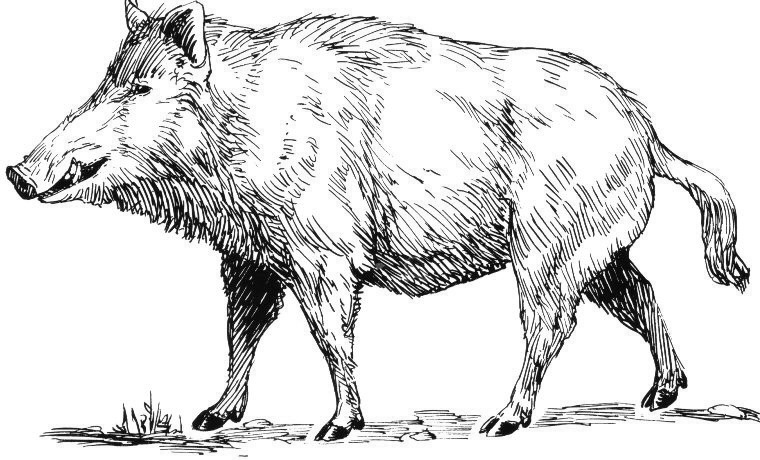
Lastly, let’s make a Wild Boar.  For this example, we’ll start with a Normal Monster and then boost it beyond the base amounts.  As a Normal Monster it has seven points; three slots in Attribute Dice, two slots for Health, and two slots of Inventory.  We’ll go with two Str dice and one Def Die, two Health boxes, and the See in the Dark and Tracking abilities under Inventory.  Boars are known for being really tough though, so let’s boost the Health up to three boxes for an adjusted total of eight points.  Not enough to qualify as a Tough Monster, but certainly meaner than a typical Normal Monster.  Complete this with some Actions and a Bonus Ability, and you have a fearsome Wild Boar!

Wild Boar
Attack Action: Tusk Gore
Melee Attack (Str) at an adjacent target.

Special Action: Charge
Gain +1 die to Melee Attack if you move your full movement before attacking.

Bonus Ability: Hard To Kill
When you take damage that would KO you, you can still act on your next turn. If you’re still KO’d at the end of your next turn, you are knocked out.
STR
☐☐
Boar.png
DEX
X
INT
X
DEF
Health
☐☐☐
Inventory: See in the Dark, Tracking

As you can see, this method is both structured and versatile, enabling one to create Monsters for Hero Kids with an understanding of how much of a challenge they may present for your group of Hero Kids.  I don’t recommend boosting a Monster more than two points beyond the power level limits charted above, however if you do so, consider giving the Monster a meaningful limitation or weakness to counterbalance their massive power level.